
Walk through Munich during IAA Mobility or ISPO trade fair week and the hotel bars fill with a specific kind of guest: executives from Seoul, Milan, Riyadh and Detroit, all in town for a few days, all expected somewhere else next week. It is exactly the crowd that has made Munich’s escort and companion agencies rethink what they put at the top of a profile. Increasingly, it is not a measurement or a price tier. It is a short row of flag icons – DE, EN, RU, AR, ZH – announcing which languages the person actually speaks.
That is a genuine shift in emphasis, not a cosmetic one. For most of the industry’s modern history, language ability was assumed or quietly implied. Now it is marketed like a credential, sitting next to (sometimes above) physical description. The question worth asking is why a service built around presence and attention started selling itself on grammar and vocabulary – and whether that premium is really about communication at all.
What used to be a footnote is now the headline
International agencies have started writing multilingualism directly into their pitch. Mynt Models, which markets high-end companions across several countries, frames its talent explicitly around “multilingual abilities” and “international cultural fluency,” reaching back to the old courtesan tradition of women “skilled in music, literature, languages, and the art of conversation.” A case study published by the UK agency Wave69 describes building an independent companion’s entire brand around being fluent in five languages, with what the agency calls a “multi-language framework” spanning English, French, Dutch, Hindi and Bengali built into her marketing from day one.
The booking platform p69 went further and treated language as infrastructure rather than decoration: it expanded to sixteen supported languages, adding Tagalog, Arabic, Punjabi and Korean, on the stated logic that “cultural comfort often translates to loyal, repeat bookings.” Search for a München escort today and you’ll see the same pattern repeated across independent profiles and agency rosters – language lists sit near the top, not buried in an “about me” paragraph.
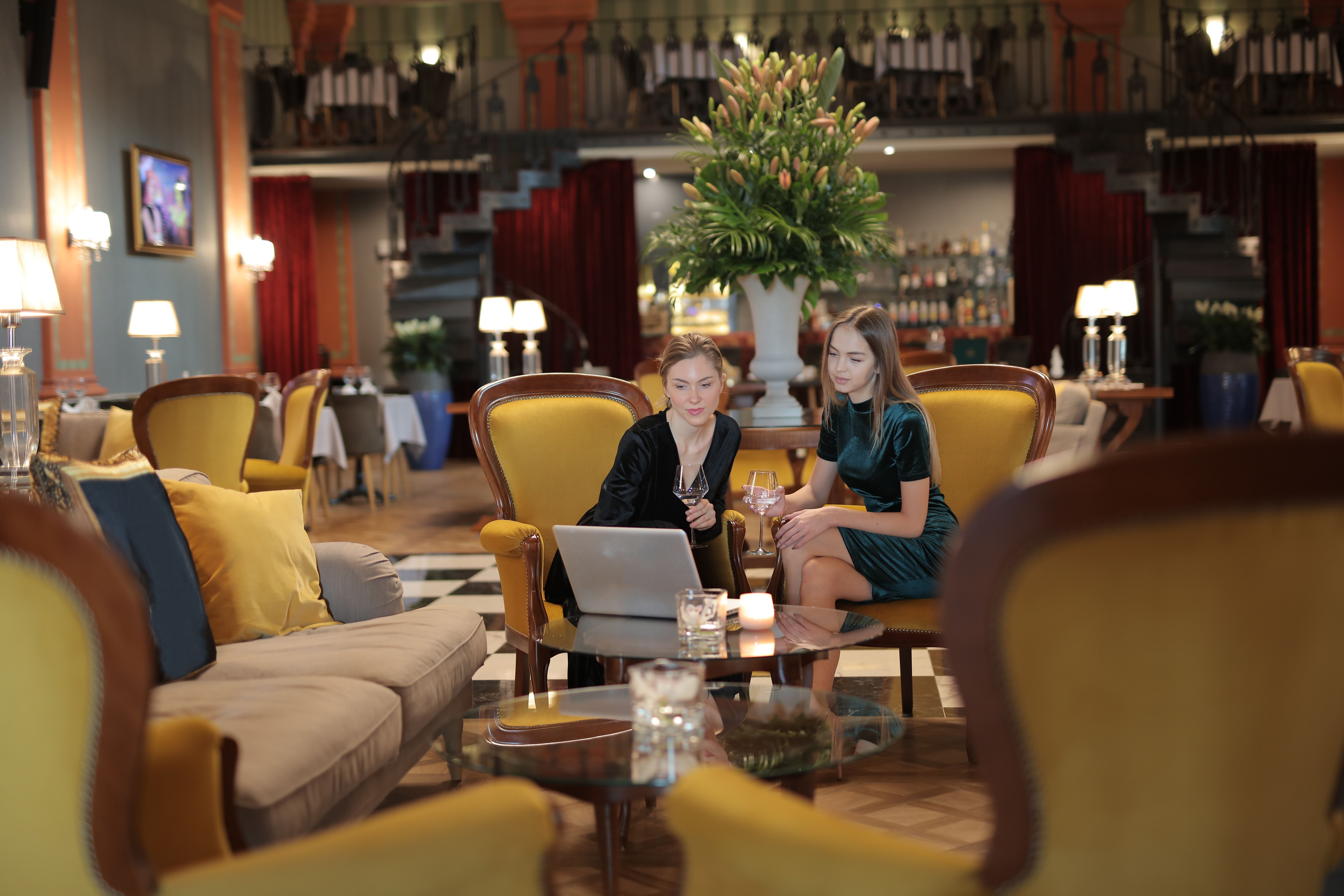
Munich didn’t get lucky, it got built this way
None of this is happening in a vacuum. Munich recorded 9.3 million guests and 19.7 million overnight stays in 2025, and 44.5% of those stays were by international visitors – the highest share of any major German city, according to Munich Tourism’s own market data. The city’s trade fair calendar amplifies that further: IAA Mobility 2025 pulled in over 500,000 visitors and exhibitors from 37 countries, a record 57% of them foreign, while ISPO’s final Munich edition drew visitors from more than 113 countries before the fair relocated to Amsterdam for 2026.
Add in a resident population where 30.6% hold non-German citizenship, drawn from 190 countries, and you get a city where the “international client” is not a niche segment of the companionship market. In parts of it, arguably, that client is the market.
| Source market | Overnight stays, 2025 | Year-on-year change |
|---|---|---|
| United States | 1,417,165 | −5.0% |
| Italy | 658,590 | +12.3% |
| United Kingdom | 528,805 | −19.3% |
| Austria | 510,493 | −5.4% |
| Switzerland | 445,662 | −7.4% |
| Gulf Arab states | 361,210 | +4.1% |
| China | 331,240 | +13.5% |
Munich’s top international visitor markets by overnight stays, 2025. The two fastest-growing entries – China and the Gulf states – are also the two least likely to arrive fluent in German or English, which is precisely the gap agencies are now marketing against. Source: Munich Tourism data and facts, published February 2026.
The uncomfortable data point buried in a German pricing study
Here is where it gets genuinely interesting, and less tidy than the marketing suggests. A 2025 hedonic regression study of the German escort sector by economist Richard Reichel tested language ability directly against price, alongside education level and other “intellectual-communicative” variables. Across the whole model, those intellectual and communicative attributes accounted for roughly 39 to 41% of price variation, versus 59 to 61% for physical attributes – a meaningful chunk, but not the majority.
The twist is in the detail: once education and advanced degrees were accounted for separately, Reichel found that “above-average language skills do not seem to play a role” as an independent, statistically significant predictor of price on their own.
I find that more useful than the marketing copy, not less. It suggests the premium was never really about the languages themselves – a menu of vocabulary you either have or don’t – but about what fluency in three or four languages tends to signal about a person’s education, mobility and social background. Bourdieu called this linguistic capital back in 1977, arguing that “a language is worth what those who speak it are worth” in a given market. Reichel’s data is a rare instance of that idea showing up, almost by accident, in a pricing model for a service industry nobody expected to test it in.
This is an old idea with a new price tag

Arlie Hochschild’s concept of emotional labor, developed studying flight attendants in the early 1980s, is the other half of the explanation. Managing a stranger’s comfort, mood and sense of being understood is work, whether or not it’s ever named as such. Later scholars extended her framework into “aesthetic labor” – the idea that appearance and presentation are themselves a managed, monetized performance in service industries. Multilingual ability slots neatly into both categories: it is simultaneously a skill that took years to build and a performance that reads instantly, before a single sentence is spoken, as sophistication.
That is a lot of weight for a flag icon to carry. But it explains why the marketing insists on listing languages rather than describing conversational skill in the abstract – a list is verifiable in a way that “great communicator” is not.
The concierge industry road-tested this first

Companionship agencies did not invent this playbook; they borrowed it from an adjacent luxury industry that ran the experiment for decades. Les Clefs d’Or, the international hotel concierge association whose gold-crossed-keys pin is itself a status symbol, requires members to have “an excellent practice of English and at least one other foreign language” as a formal membership condition, alongside five years of experience. Its French training program builds a mandatory second language directly into the curriculum, with graduates placed in Dubai, Hong Kong, Switzerland and the UK.
Private aviation shows the same pattern from the staffing side. Aviation recruiter Nicoleta Gherman noted that among the VIP cabin crew roles she was filling, “most common requests lately were for German, Russian, Mandarin, Spanish, French and Luxembourgish” – a list that tracks almost exactly onto where private wealth actually comes from right now, not onto any general theory of useful languages. VistaJet makes the underlying logic explicit on its own recruiting pages, noting that language fluency “is especially the case on private jets because flight attendants are communicating with VIPs one-to-one,” with none of the anonymity a large cabin or a call center provides.
Is this really about being understood, or about something else?
The obvious objection is that none of this should matter much anymore. English functions as the default language of international business and luxury travel, and translation apps have gotten good enough that a determined concierge, pilot or companion could muddle through almost any conversation without native fluency in a client’s language. If the goal were pure information exchange, the “multilingual premium” would be a solved problem, not a growing selling point.
I think that objection is right about the mechanics and wrong about the point. Nobody booking a five-figure evening or a private jet seat is doing it because Google Translate is unreliable. They’re paying, in part, for the absence of friction – for not having to slow down, repeat themselves, or watch someone reach for a phone mid-conversation. Fluency removes a small, constant tax on the interaction that a fluent client barely notices until it’s gone.
Where I’d push back on the industry’s own framing is the implication that the language itself is the product. Reichel’s regression suggests otherwise: it’s the bundle of things fluency tends to travel with – education, mobility, the kind of upbringing that produces someone comfortable in four countries – that the client is actually buying. The languages are just the part of that bundle you can list on a profile and verify in the first ninety seconds of conversation.
What actually gets taught, and what doesn’t

A study of front-office staff across ten luxury Mumbai hotels found foreign-language proficiency correlated directly with guest satisfaction scores and upselling ability, but the same study flagged high training costs and low staff motivation as the reasons most properties never scale it beyond a handful of employees. That gap – real demand for the skill, real cost to build it, uneven follow-through – maps almost exactly onto what’s happening in companionship. Some agencies and independent companions treat language study as a genuine investment, the way a Les Clefs d’Or candidate treats a second language as a career requirement. Others simply advertise languages they speak at a conversational level and let the client’s expectations do the rest.
That gap between the marketing and the delivery is, if I’m honest, the part of this trend I’d want to see more scrutiny on. A flag icon on a profile is a claim, not a certification, and unlike a concierge’s professional association, nobody is auditing it.
How this article was put together. Findings are drawn from Munich Tourism’s 2025-2026 visitor statistics, IAA Mobility and ISPO’s own visitor reports, a 2025 hedonic pricing study of the German escort sector by economist Richard Reichel, Les Clefs d’Or’s published membership requirements, aviation-industry recruiter commentary, and academic sources on linguistic and aesthetic labor including Bourdieu and Hochschild, all reviewed in August 2026. Market-size figures for the broader “companionship economy” vary by 40% or more between research firms with undisclosed methodology, so none are presented here as settled numbers. Tourism and trade-fair statistics are annual and should be rechecked after each edition.